Parksville Museum: Heritage & Culture Brand Identity
6 min read
A heritage brand identity for the Parksville Museum. A skyline of historic buildings that tells the story of the community at a glance.
The Brief
Nikki Gervais, manager of the Parksville Museum on the East Island Highway, needed a brand identity that would capture the character of the museum’s collection of historic buildings. The museum grounds are home to the Parksville Farmer’s Market in the summer months, so the brand also needed the flexibility to represent both the heritage site and the market.
The tagline Preserving our Past · Harvesting our Present · Growing our Future encapsulated the museum’s mission. The brand needed to carry that same sense of continuity between past and present.
It Started With a Sketch
A good logo often starts well before the computer. After walking the museum grounds and spending time with the buildings, the first direction came out as a rough pencil sketch: a row of rooflines above a handwritten wordmark.
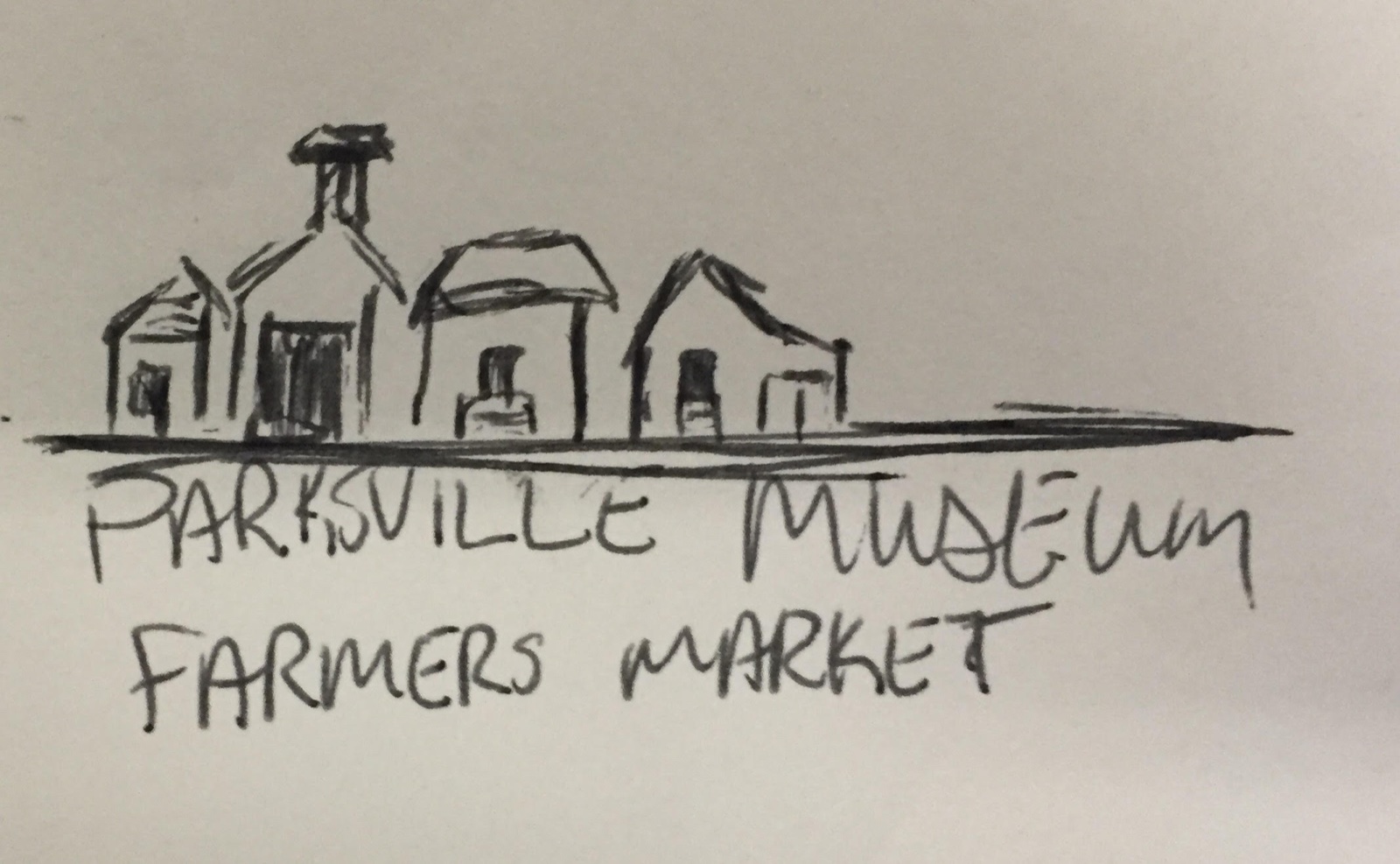
It was quick and unpolished, but the core idea was already there: a skyline of real buildings, sitting above the name, feeling like it belonged to the place rather than being imposed on it.
Every direction explored afterward traced back to this moment.
The Buildings Are Real
What makes the Parksville Museum logo work is that every building in it is a real building on the museum grounds. Visitors who walk through the site recognize each one.
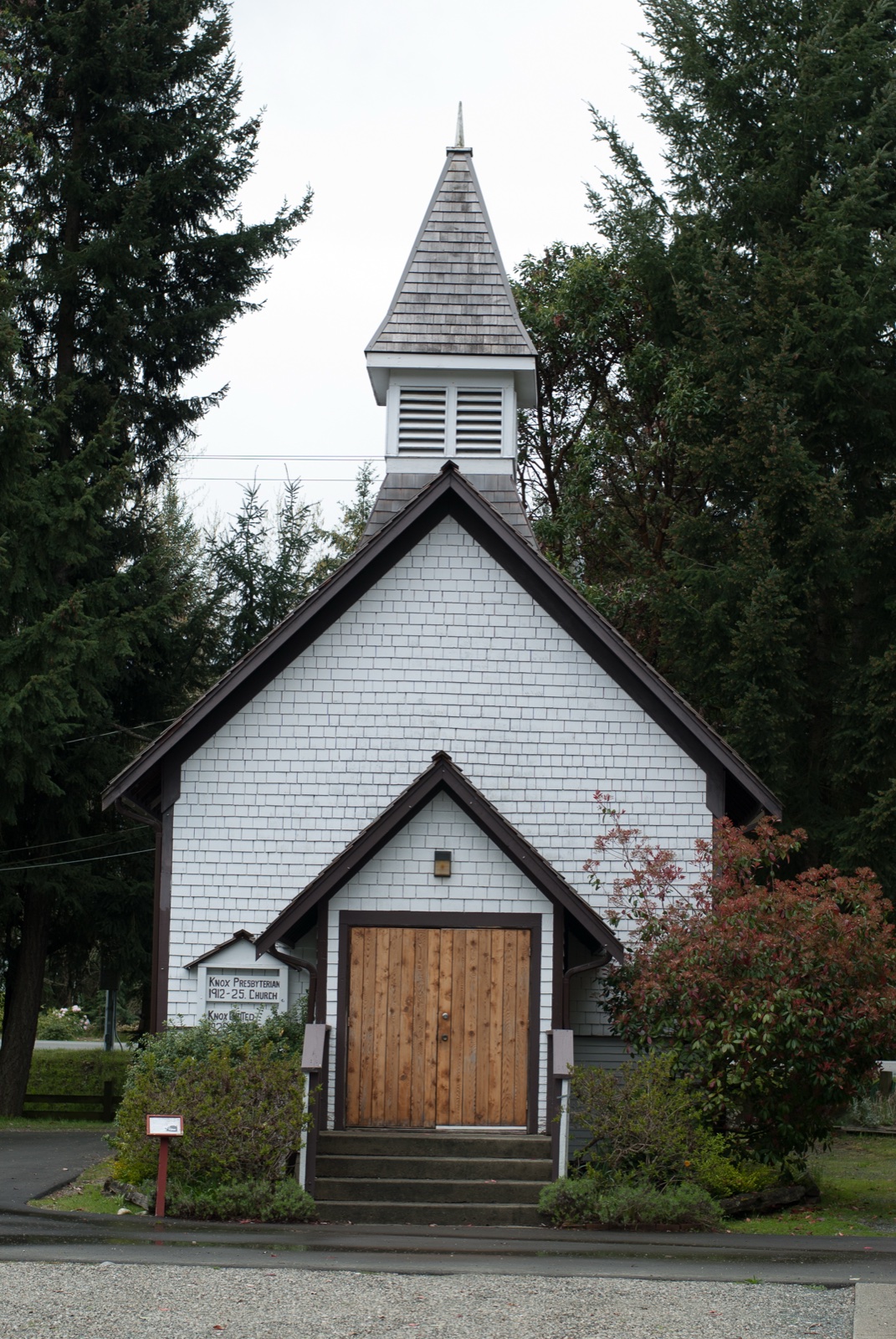
The Knox Presbyterian Church, with its distinctive steeple, became the visual anchor of the mark. It’s the tallest element and the most recognizable, so it sits near the centre and gives the skyline its silhouette.
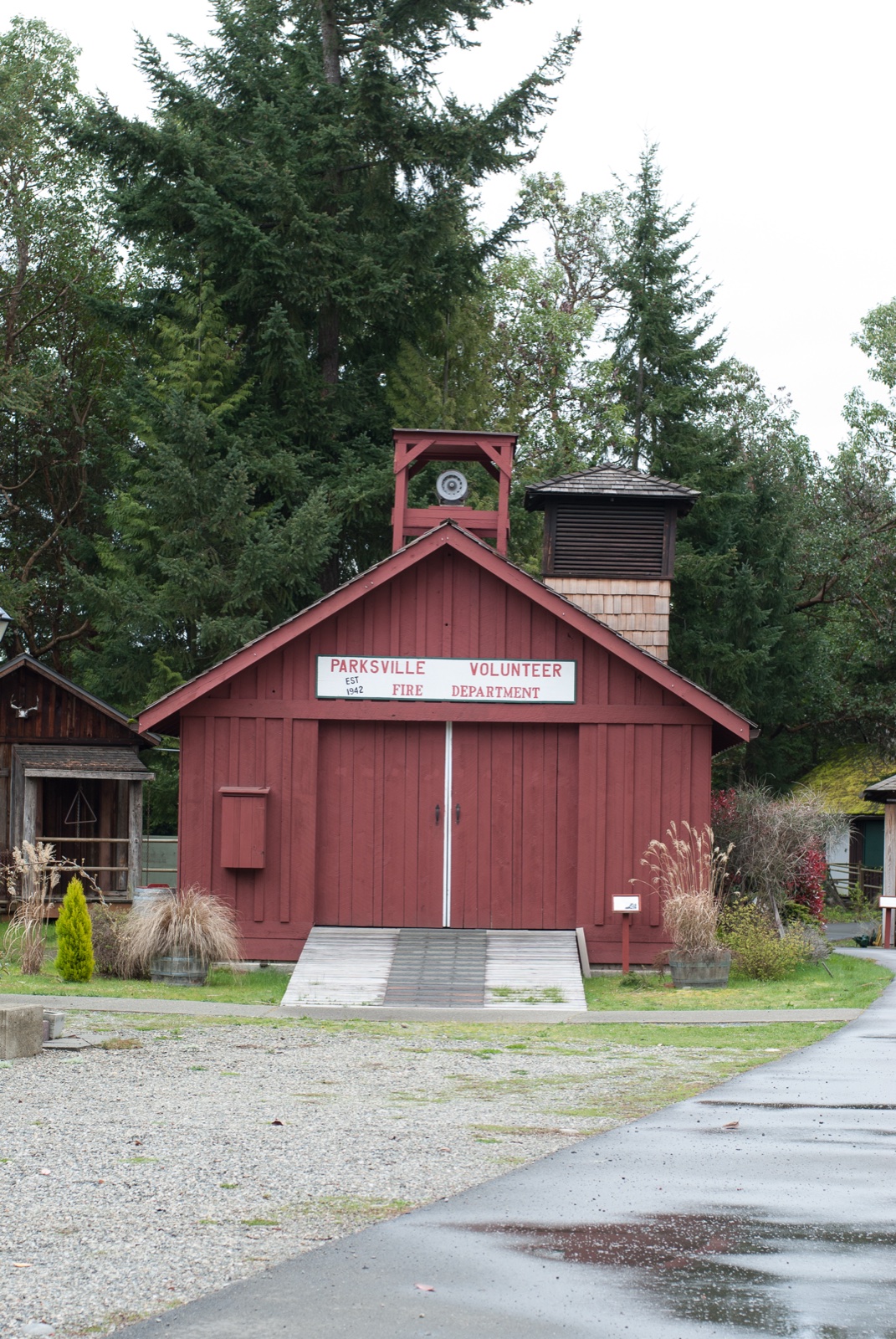
The Parksville Volunteer Fire Department building, with its bell tower and painted signage, gives the logo its second vertical accent. Its cupola echoes the church steeple without competing with it.
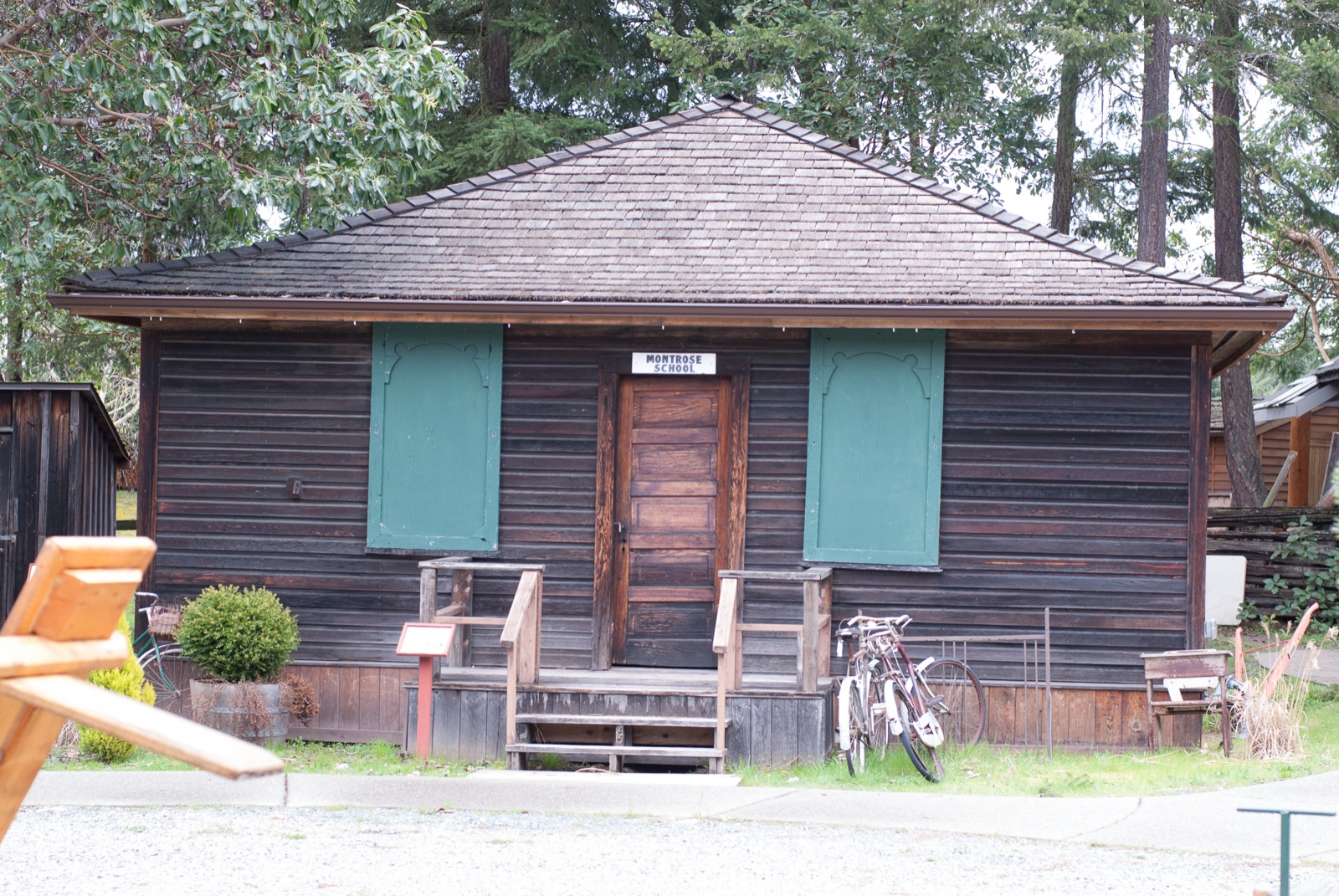
The Mortrose Schoolhouse, a dark wooden single-room building, sits low in the silhouette. Its hipped roof adds visual rhythm between the taller structures.
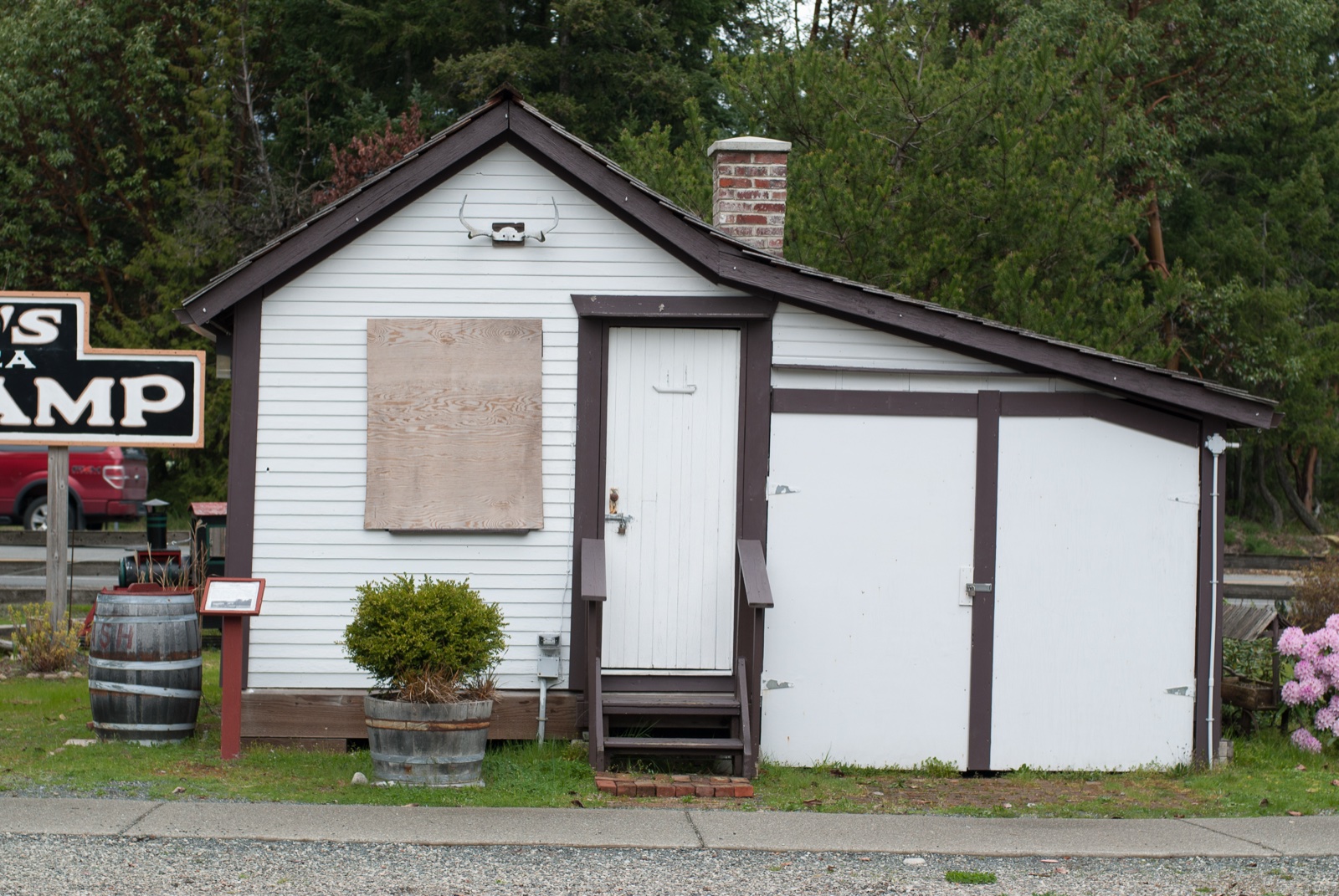
Craig’s Auto Camp, a tiny white cabin that once served motorists travelling the Island Highway, anchors the left side of the logo. It’s the smallest element and reads almost as punctuation, the gap between the silhouette and the rest of the grounds.
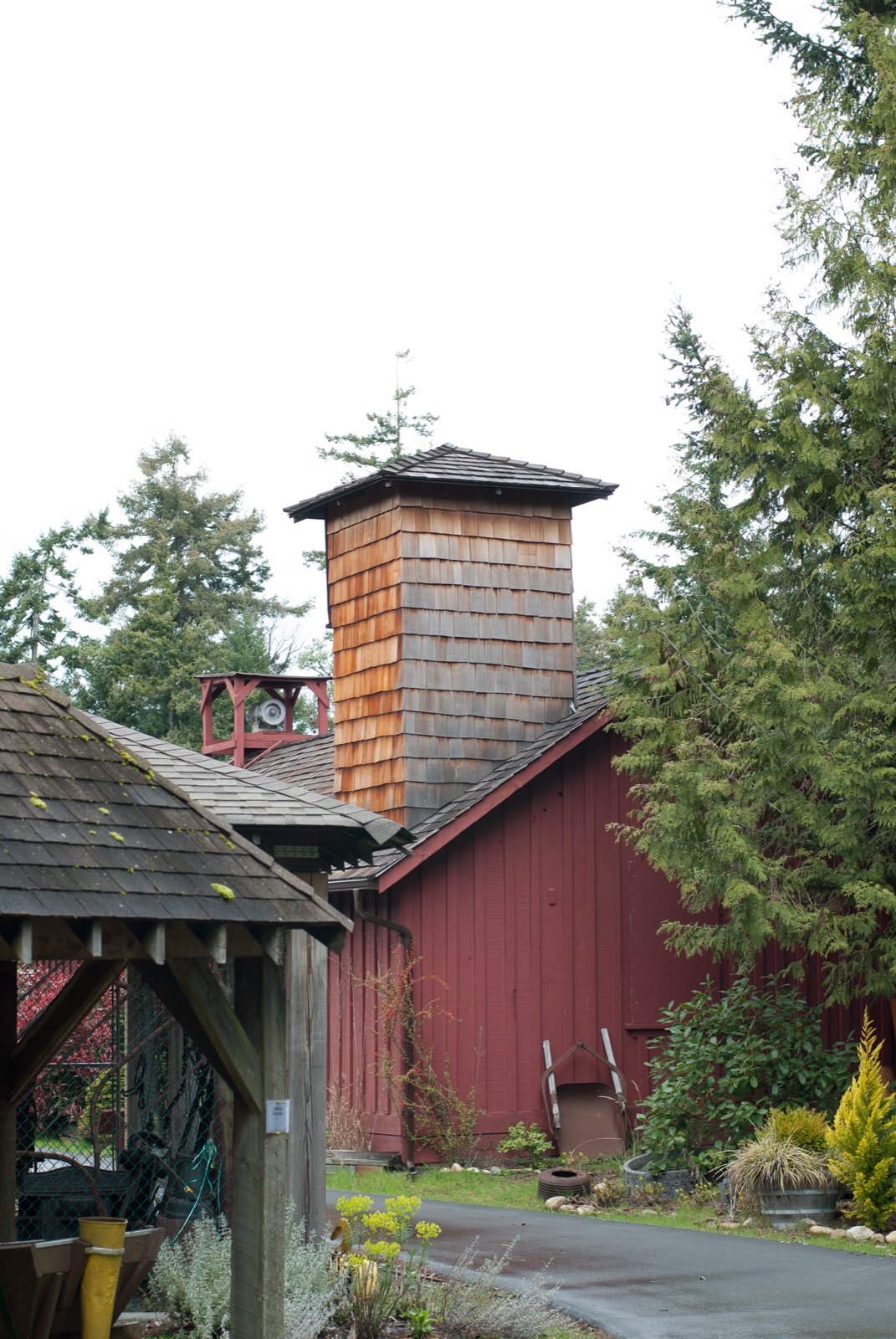
The cedar-shingled water tower and adjoining red structure fill out the right side, adding texture and mass to balance the composition.
Each building was studied from photographs and drawn individually, then composed into a single horizontal mark. The goal wasn’t literal illustration. It was to capture the feeling of walking onto the museum grounds.
One of the quieter design challenges was the composition itself: keeping the relative scale of the buildings as accurate as possible, while ordering them in a way that felt visually balanced as a single mark. The real buildings don’t line up this tidily in life. But in the logo, the church steeple needed to sit near the centre to anchor the silhouette, the smaller structures needed to frame rather than disappear, and the overall rhythm of peaks and rooflines needed to feel natural at a glance. Accuracy and aesthetics had to meet in the middle.
Two Styles, One System
The brand needed to live in two worlds: formal heritage applications and small, modern touchpoints. So two versions of the logo were developed from the same underlying composition.
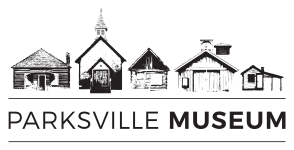
The detailed version preserves the hand-drawn textures: the shingles, the siding lines, the subtle wear on the buildings. It reads as artwork, appropriate for large-format signage, exhibition materials, and premium print.
The silhouette version strips the same composition down to solid shapes. It holds up at tiny sizes (favicons, embroidered patches, social media avatars) and gives the brand a modern counterpart to the heritage illustration.
The brand guidelines established clear use cases for each: detailed for the storytelling contexts, silhouette for everything else.
In the World
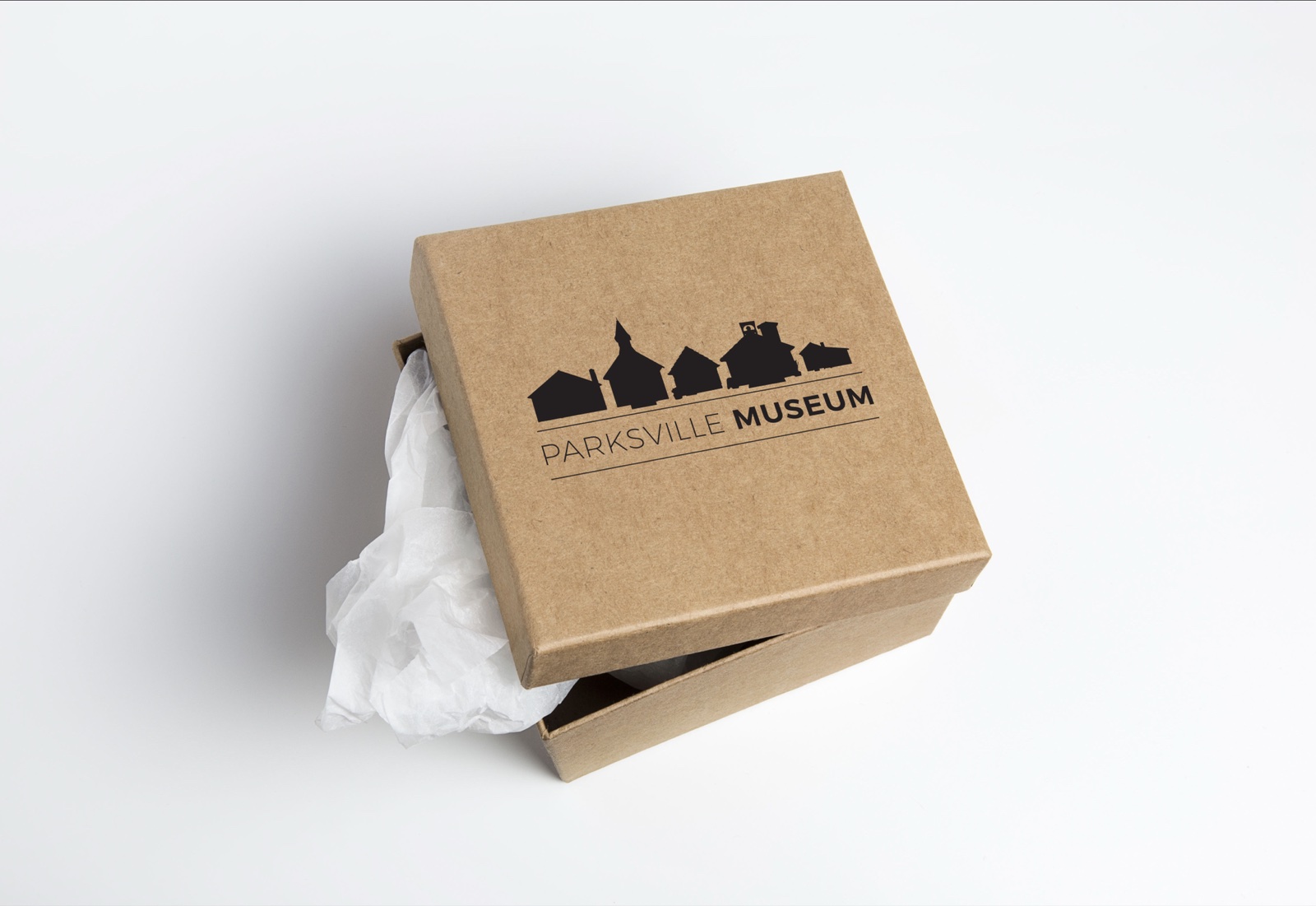
On a kraft gift box from the museum shop, the silhouette logo feels handmade and heritage-appropriate, exactly the tone a small museum wants to set.
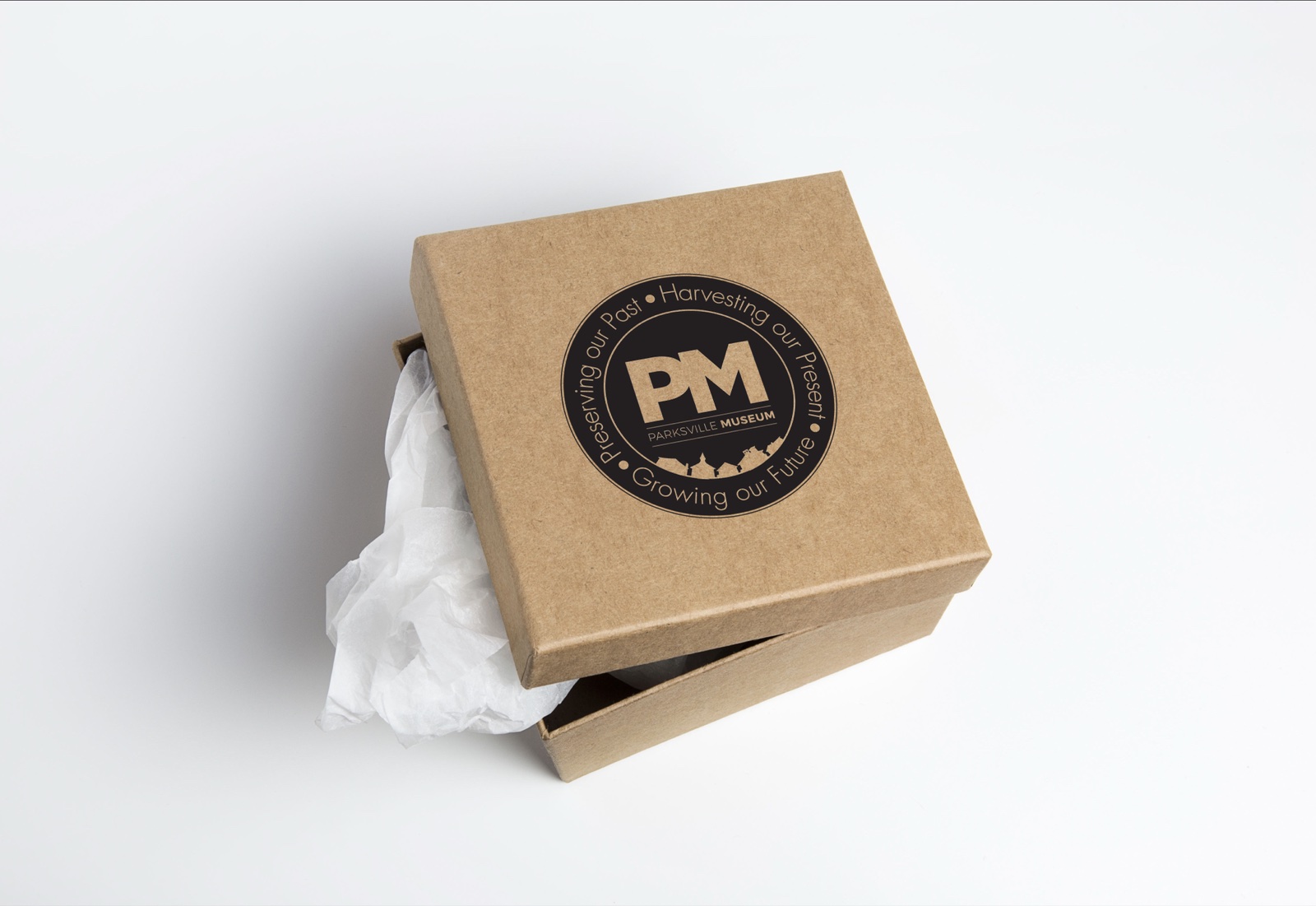
For dual-purpose applications, a circular PM seal was developed as a complementary mark, with the tagline Preserving our Past · Harvesting our Present · Growing our Future arcing around a bold PM monogram with a tiny skyline tucked below. It works where the horizontal logo doesn’t fit.
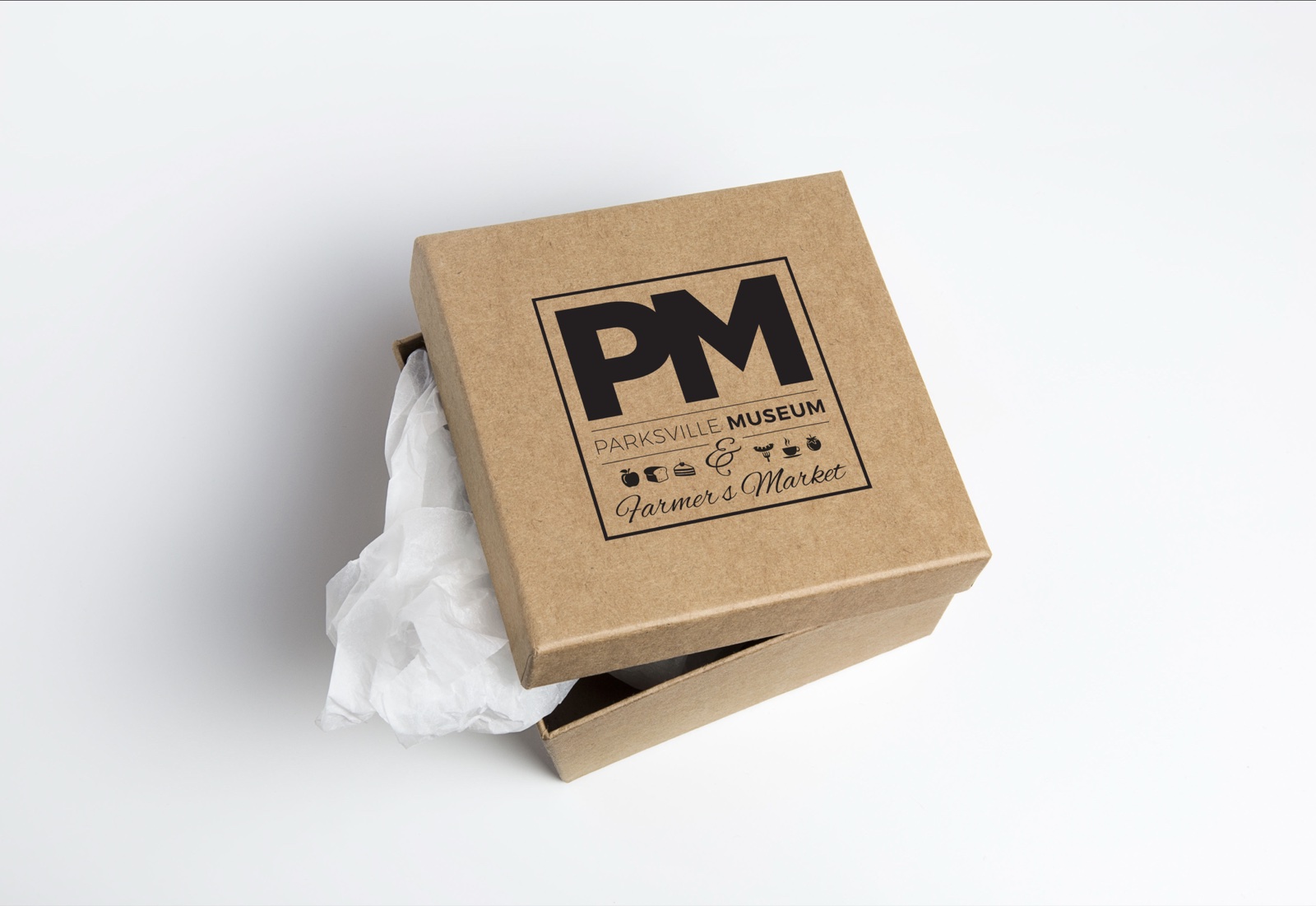
For the summer Farmer’s Market on the museum grounds, a combined Museum & Farmer’s Market lockup was designed: a PM wordmark with a script flourish and small produce icons. One cohesive brand, two distinct voices.
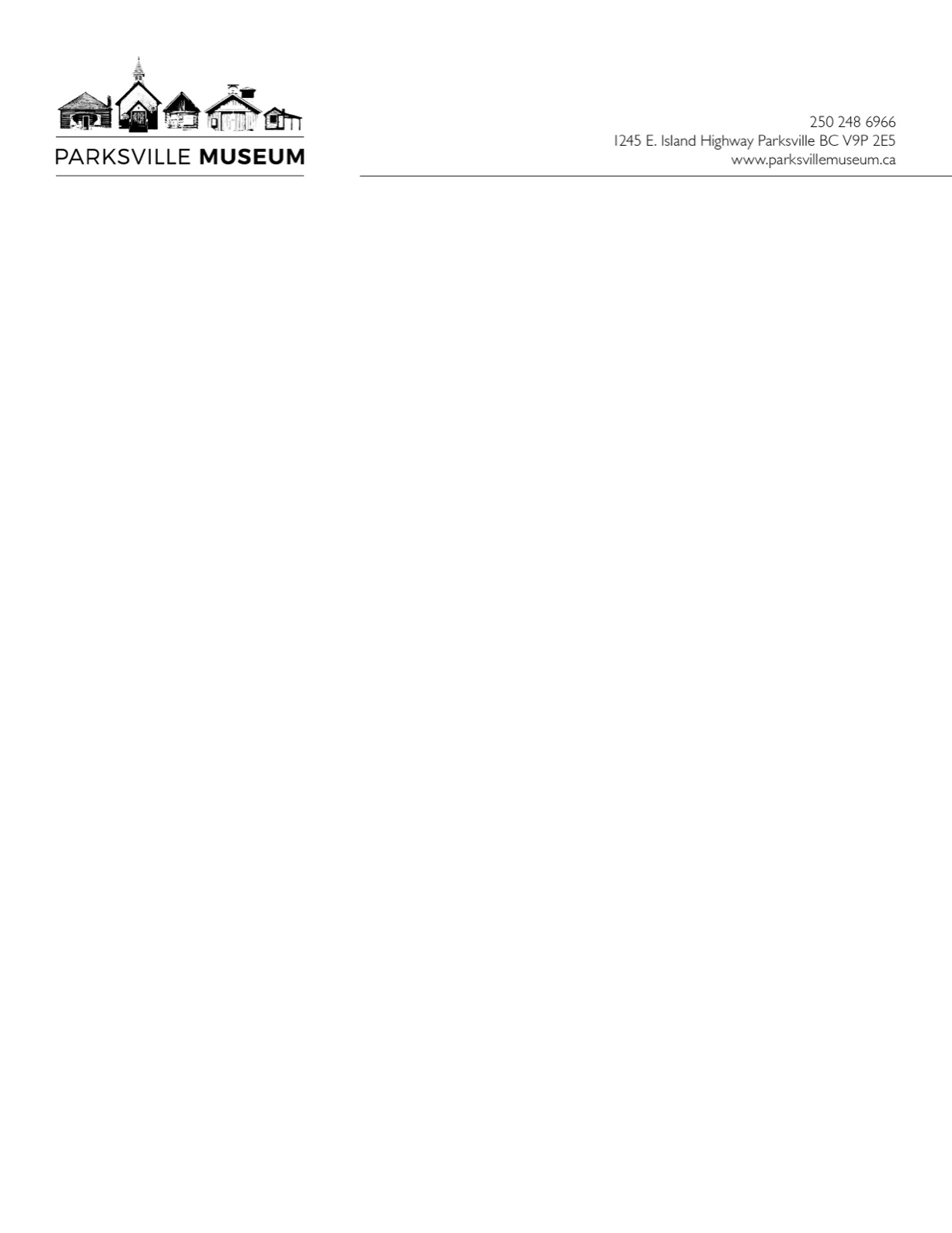
On formal stationery, the detailed version takes the lead: quiet, substantial, and appropriately heritage.
The Result
The Parksville Museum identity is one of those logos that functions as both a brand mark and a piece of storytelling. Visitors recognize the actual buildings in the silhouette, which creates an immediate connection between the logo and the place.
On a kraft gift box from the museum shop, it feels handmade and heritage-appropriate. On a highway sign, it’s instantly identifiable. On a digital banner or a letterpress program, it adapts without losing its character.
The dual illustration system, detailed and simplified, gives the museum the flexibility to maintain brand consistency across everything from large banners to tiny social media icons, and the circular PM seal and Farmer’s Market lockup extend the brand into seasonal and special-purpose applications without diluting it.
A decade on, the mark still holds up. That’s what a logo rooted in its place is supposed to do.